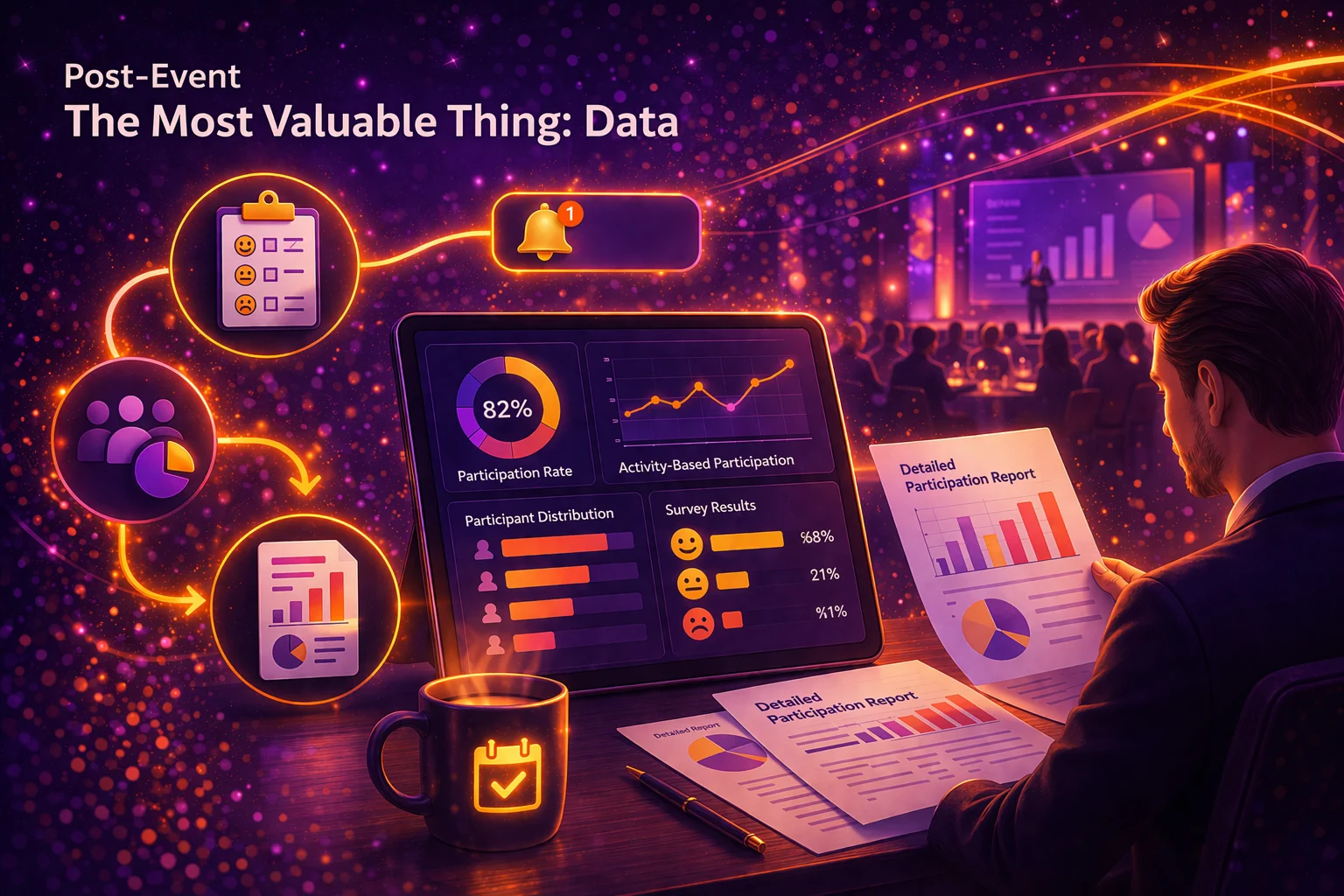
When an event ends, the first thing evaluated is often the overall flow: participant satisfaction, content success, stage performance, logistics order, and the general atmosphere. But in professional event management, the real evaluation often begins after the event is over. Because at the end of the day, the most valuable output is not only how the event went, but what data remains behind.
Every action during the event, when tracked with the right systems, produces very valuable information for future organizations. Which sessions received intense interest, at which hours entry volume increased, which notifications were opened, what content participants interacted with more, and where congestion formed are critical not only to understand that day’s performance, but also to make much better decisions in the future.
Because event management today is not only about building a good flow, but also about being able to measure that flow.
In the past, post-event evaluations in many organizations were largely based on observation. Which session was successful was guessed by looking at room occupancy, and which content attracted attention was tried to be understood through general comments. Today, however, much clearer data can be obtained thanks to digital infrastructures.
When did a participant log in to the app, which agenda items did they view, which notification did they open, which session did they attend, or at which points did they use their QR code? These can all be recorded within the system.
This makes it possible to clearly see the behavior map formed behind the scenes of the event.
For example, there may be four different sessions across the day. Even if the room capacity looks full, the real level of interest may be different. Some sessions may receive intense entry at the last minute, while others may progress with lower participation despite reservations.
Insights like these are very valuable for future organizations.
Because teams can plan not only by guesswork, but by real usage data.
Push notification data is also very important.
Open rates of notifications sent during the event answer questions like:
At which hours did notifications draw more attention?
Which content was opened more?
Which message language was more effective?
Which topics did participants respond to faster?
These insights strengthen the communication language in future events.
For example, you may see that transfer information sent early in the morning has high open rates, while longer notifications with extended explanations receive lower interaction. This helps design a more accurate communication plan in the next event.
Data produced through QR usage has its own value as well.
When participant entry times are analyzed, peak moments become clearly visible. You can understand which entrance gate is used more and in which areas movement increases.
If the QR system is used for entitlement management, it is also measurable which usage areas are preferred more.
For example:
- at which hours catering usage increased
- in which areas congestion formed
- which entitlements were fully used
- which entitlements were used less than expected
Data like this makes operational planning much more realistic in the next event.
Participant behavior does not produce only logistics data; it also provides important insights on the content side.
Most viewed topics in the agenda, access rates to speaker profiles, and which content is examined more create a very strong foundation for evaluating the content side of the event.
Some sessions may not have high physical attendance in the room, yet may receive high attention inside the app. Some speakers may have more profile views. Some topics may attract participants’ interest earlier.
These details are especially valuable in planning the next year for corporate events.
Post-event data is also important for understanding the return on investment.
In corporate organizations, saying only “the event was held” is no longer enough. It is expected to measure in which areas the event was effective, how participant behavior evolved, and how well the communication tools performed.
That is why a well-built digital structure does not only ease the moment of the event; it also creates a meaningful reporting foundation after the event.
Especially in large organizations, these data points become critical for decision makers:
- total entry count
- hour-by-hour entry intensity
- session participation rates
- notification open rates
- content view statistics
- QR usage movements
- areas with the highest interest
These data points can affect many decisions for the next organization: from budget planning to room capacity, from agenda design to communication strategy.
In fact, the value of a well-managed event often becomes clearer after the event ends.
Because what remains behind is not only a good feeling, but concrete and measurable insight.
One of the strongest reasons for using event app in professional events today is exactly this: not only managing the event, but making the data produced by the event meaningful.
Because data does not only describe the past; it also determines the quality of the next organization.