For years, preparing a post-event report has been a natural part of event operations. Participant count, session occupancy, and overall satisfaction are often turned into a summary. But today, data is not collected only for reporting.
Because data has become one of the core decision tools that determines the quality of the next events.
Every digital action created during an event produces an important insight.
When did the participant enter, which sessions did they view, which notification did they open, where did congestion form? These details do not only describe the past; they also make planning the future easier.
For example, if a session received a lot of attention, that does not only show that it went well. It also suggests that similar content should be given more space in the next event.
Notification open rates are similarly valuable.
Which times generated more attention? Which message language received more interaction?
These insights strengthen the communication strategy.
QR usage data is also very important for operational planning.
You can see at which times congestion formed and which usage areas were preferred more.
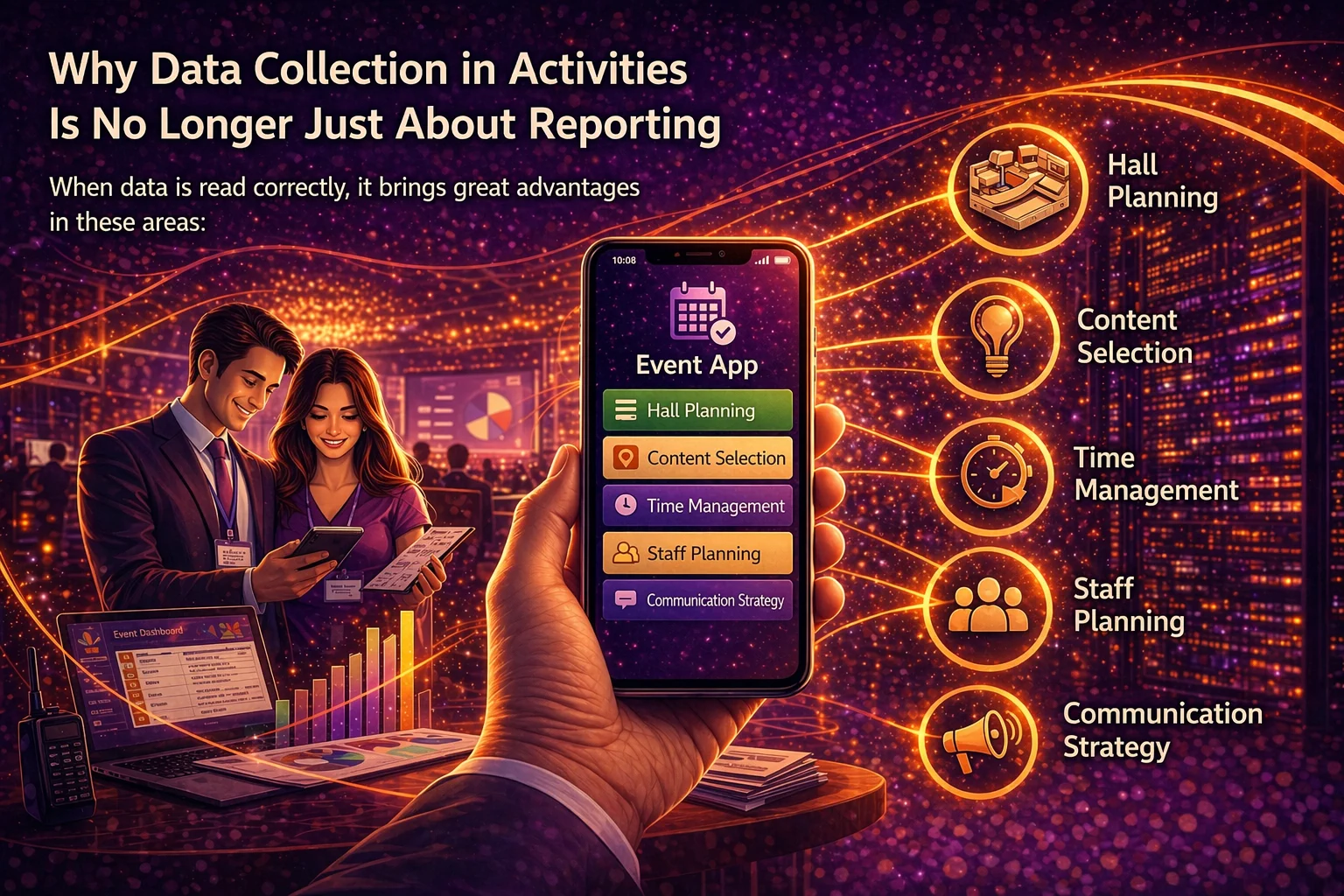
When data is read correctly, it provides major advantages in these areas:
- room planning
- content selection
- time management
- staff planning
- communication strategy
That is why data is not only a table delivered at the end of an event.
In fact, good data is the strongest foundation for building the next organization more effectively.